
Automotive
Cleaning of precision parts before coating or bonding.

Prepare metal surfaces with electrochemical cleaning.
How it works
A direct electric current is passed between the part (acting as a cathode or anode) and an electrode.
This triggers an electrochemical reaction that breaks down and removes oxide layers, scales, oils, and other surface contaminants.
The result is a clean, activated surface ready for further processing like electroplating, anodizing, painting, or welding.
Industry applications
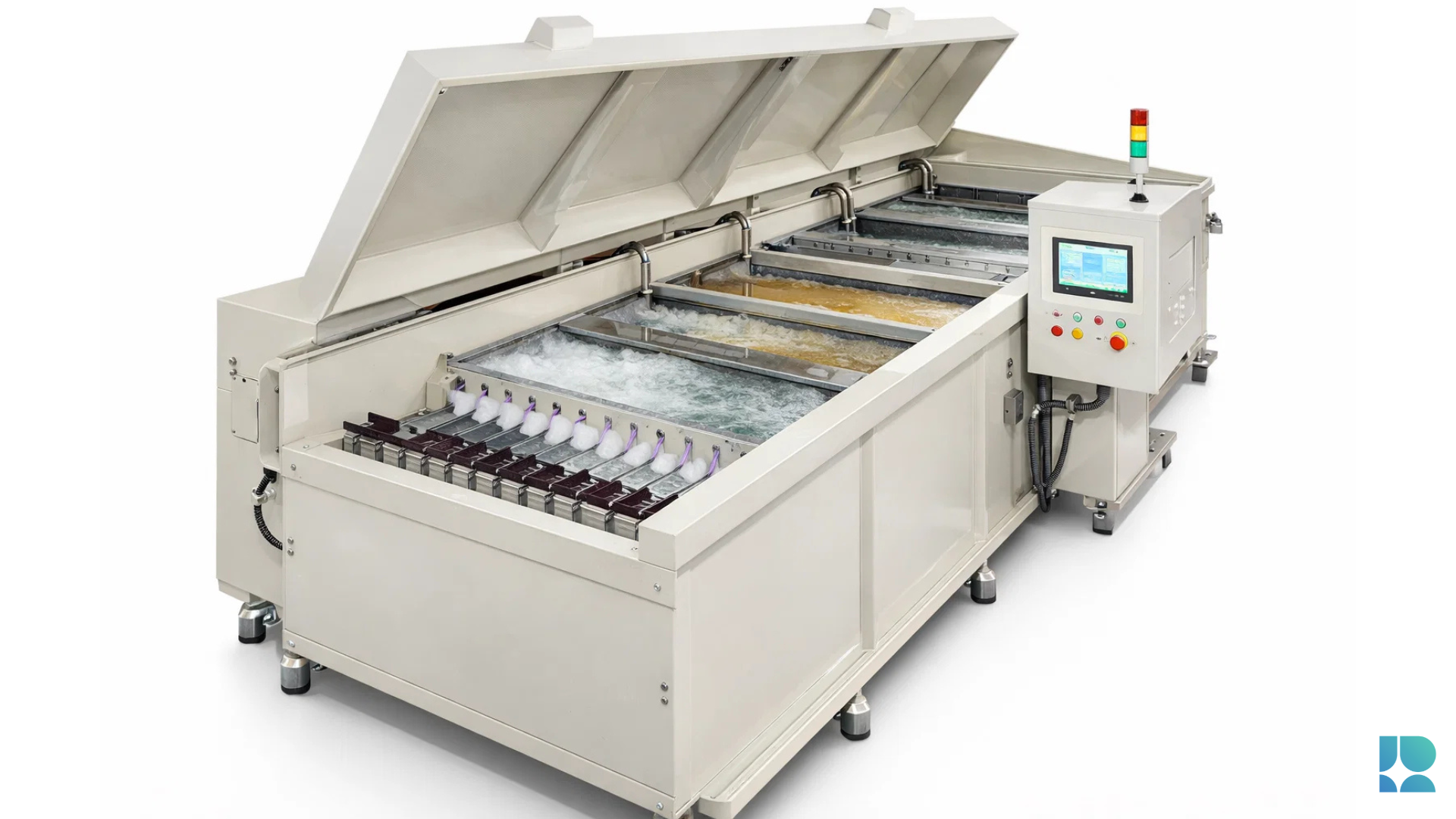
Electrolytic Cleaning Equipment is a specialized cleaning system that uses electrochemical reactions to remove oxides, scales, rust, oils, and contaminants from metal surfaces. Unlike conventional mechanical or chemical cleaning, electrolytic cleaning ensures uniform, efficient, and eco-friendly surface preparation that is critical for electroplating, coating, welding, and precision manufacturing.
Automotive
Cleaning of precision parts before coating or bonding.
Aerospace
Surface preparation for high-performance coatings.
Electronics
Cleaning copper, brass, and aluminum parts for conductivity.
Medical Devices
Preparing stainless steel and titanium parts for coatings.
Metal Finishing
Rust, scale, and oxide removal for welding and painting.
Also built for
Key features
Ralsonics’ Electrolytic Cleaning Equipment is engineered for high-performance industrial applications, offering consistent cleaning results, reduced chemical consumption, and enhanced process reliability.
Efficient Electrochemical Cleaning
Removes oxides, grease, and rust with precision.
Uniform Surface Preparation
Ensures even cleaning across complex geometries.
Eco-Friendly Operation
Lower chemical usage compared to traditional acid pickling.
Stainless Steel Construction
Durable tanks with corrosion resistance.
Customizable Electrolyte Options
Based on material type and application.
Digital/PLC Control
Programmable cycles for accuracy and repeatability.
Integrated Rinsing & Drying
Optional modules for end-to-end cleaning.
Safety Systems
Overload protection, fume extraction, and automatic shut-off.
Advantages
Superior Cleaning Efficiency
Removes stubborn oxides and scales more effectively than mechanical methods.
Enhanced Adhesion
Provides clean surfaces for electroplating, painting, and coating.
Environmentally Friendly
Lower acid consumption, reduced waste generation.
Consistent Results
Uniform cleaning for batch and continuous processes.
Reduced Manual Effort
Automated operation minimizes labor requirements.
Customizable
Tailored to different metals such as steel, copper, aluminum, brass, and alloys.
Improved Product Quality
Ensures defect-free coatings and strong bonding.
Common questions
Before you choose, we'll review the configuration, specifications and material compatibility with you.
TalktousTalktousAll products