
Automotive
** Cleans engine tubes and other cylindrical components.

Introduce ultrasonic energy into your cleaning liquid.
How it works
Retrofitting in existing tanks
Harsh and demanding industrial environments
Vacuum conditions
Powerful cleaning requirements
Using ultrasonic in multiple tanks
Industry applications
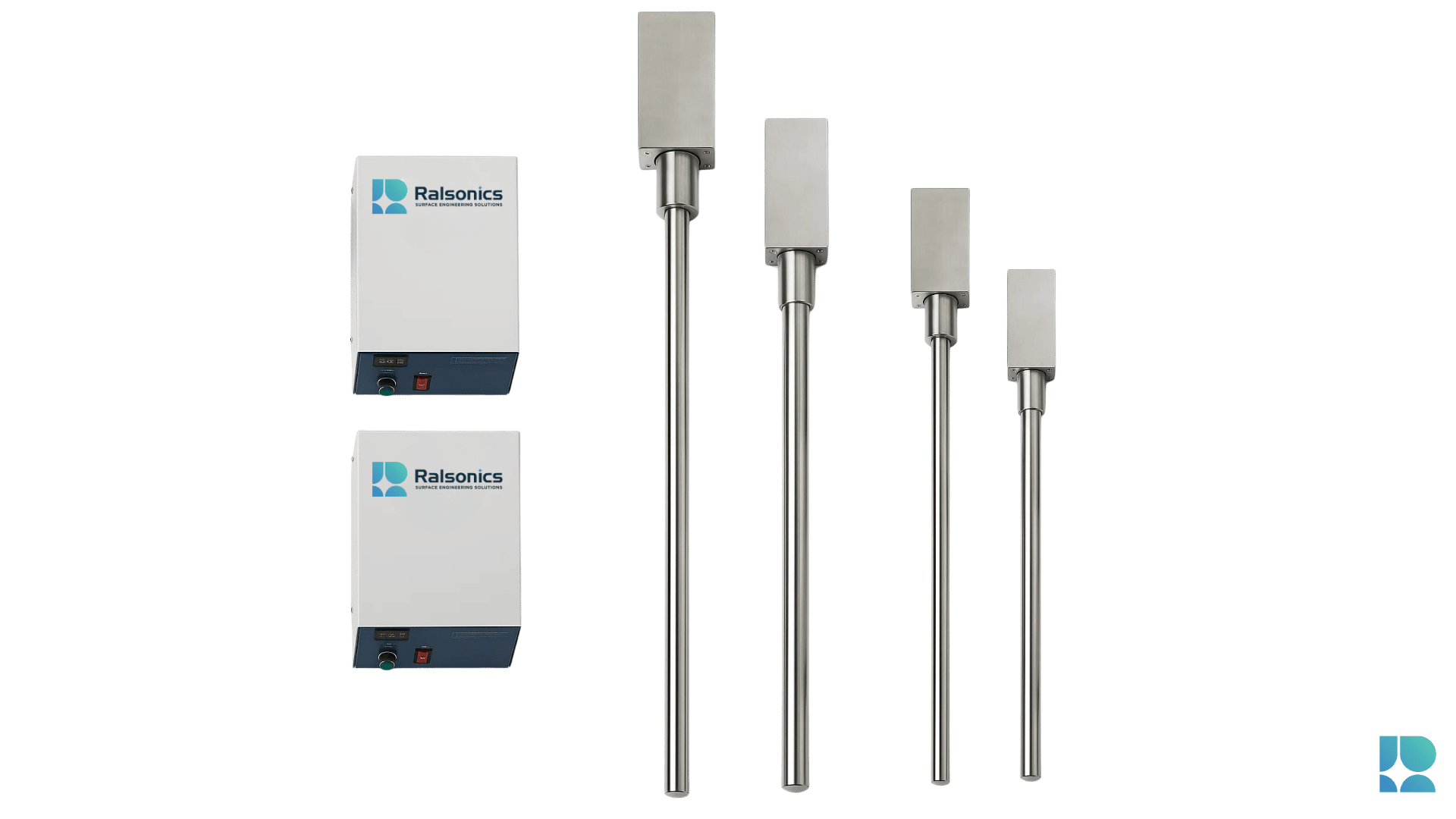
For precise and efficient cleaning applications, our Ultrasonic Tube Resonator offers an unparalleled solution. Utilizing advanced ultrasonic technology, this device ensures thorough cleaning of tubes and cylindrical components, making it ideal for industries requiring meticulous cleanliness standards.
Automotive
** Cleans engine tubes and other cylindrical components.
Aerospace
** Maintains the cleanliness of precision parts for optimal performance and safety.
Electronics
** Cleans tubes and components with precision.
Medical Devices
** Ensures sterility and removes contaminants from surgical and diagnostic instruments.
Pharmaceuticals
** Cleans production equipment to maintain hygiene standards.
Chemicals
** Suitable for industrial sonochemistry.
Environmental
** Effective in treatment processes.
Also built for
Key features
Ralsonics ultrasonic Tube resonators are advanced ultrasonic cleaning solutions engineered for applications that require powerful yet space-efficient cleaning performance. Unlike traditional immersible transducers, tube resonators are cylindrical ultrasonic devices that can be easily installed into round, oval, or irregular tanks without major modifications.
360° Ultrasonic Action
Uniform cavitation in all directions.
Compact & Space-Saving
Ideal for tanks where immersible transducers cannot be used.
Durable Build
Constructed from SS 316L stainless steel for corrosion resistance.
Customizable Sizes & Frequencies
Tailored to customer-specific tank dimensions and applications.
Low Maintenance Design
Sealed and robust for long-term use.
Energy Efficient
Optimized transducer design for maximum output with lower power consumption.
Compatible with Continuous Operation
Air-cooled or water-cooled options available.
Advantages
These resonators are widely used in flow-through systems, electroplating lines, and specialized cleaning applications, where consistent ultrasonic energy distribution and easy installation are essential.
Easy Integration
No need to redesign or replace existing tanks.
Versatility
Works in irregularly shaped or space-constrained tanks.
High Cleaning Efficiency
Even distribution of ultrasonic energy.
Cost-Effective Retrofit Solution
Lower investment than full ultrasonic systems.
Scalable & Modular
Multiple tube resonators can be installed for larger tanks.
Non-Intrusive
Can be positioned without disrupting workflow.
Reliable Performance
Long-lasting operation with minimal maintenance.
When to use this
Ralsonics’ tube resonators can also be used for industrial sonochemistry applications as well as for wastewater and sewage treatment applications.
Common questions
Before you choose, we'll review the configuration, specifications and material compatibility with you.
TalktousTalktousAll products